Walk into any modern apartment complex, commercial tower, or gated community today, and you'll find sophisticated systems managing everything, from lighting to security to air conditioning. Yet, one of the most critical resources in any building often still runs on decades-old practices: water. That's changing fast. And for good reason. The Hidden Cost of Doing
Walk into any modern apartment complex, commercial tower, or gated community today, and you’ll find sophisticated systems managing everything, from lighting to security to air conditioning. Yet, one of the most critical resources in any building often still runs on decades-old practices: water.
That’s changing fast. And for good reason.
The Hidden Cost of Doing Nothing
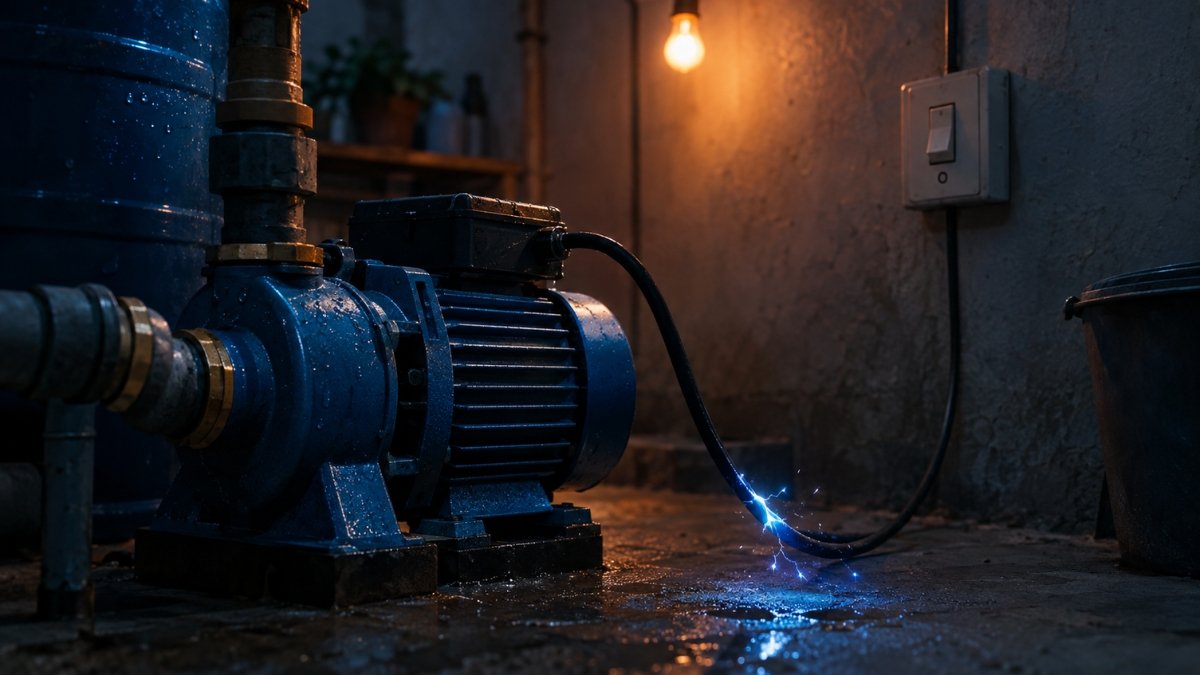
Water wastage in buildings isn’t dramatic. It doesn’t announce itself with alarms or visible breakdowns. It happens quietly, through a pump that keeps running after the overhead tank is full, through a borewell motor that runs dry because nobody checked the sump level, through a burst pipe that went unnoticed for hours.
The damage adds up. Electricity bills spike. Motor burnouts drain maintenance budgets. Basement flooding becomes a recurring nightmare. And in a country where water scarcity is a lived reality for millions, the waste carries a weight beyond just rupees.
According to estimates, buildings waste anywhere between 20 and 40 percent of their water through preventable inefficiencies. That’s not a minor leak; that’s a structural problem waiting for a structural solution.
What “Smart” Actually Means for Water
There’s a lot of noise around “smart” technology. But in the context of water management for buildings, smart really means one thing: the system knows what’s happening and responds without waiting for human intervention.
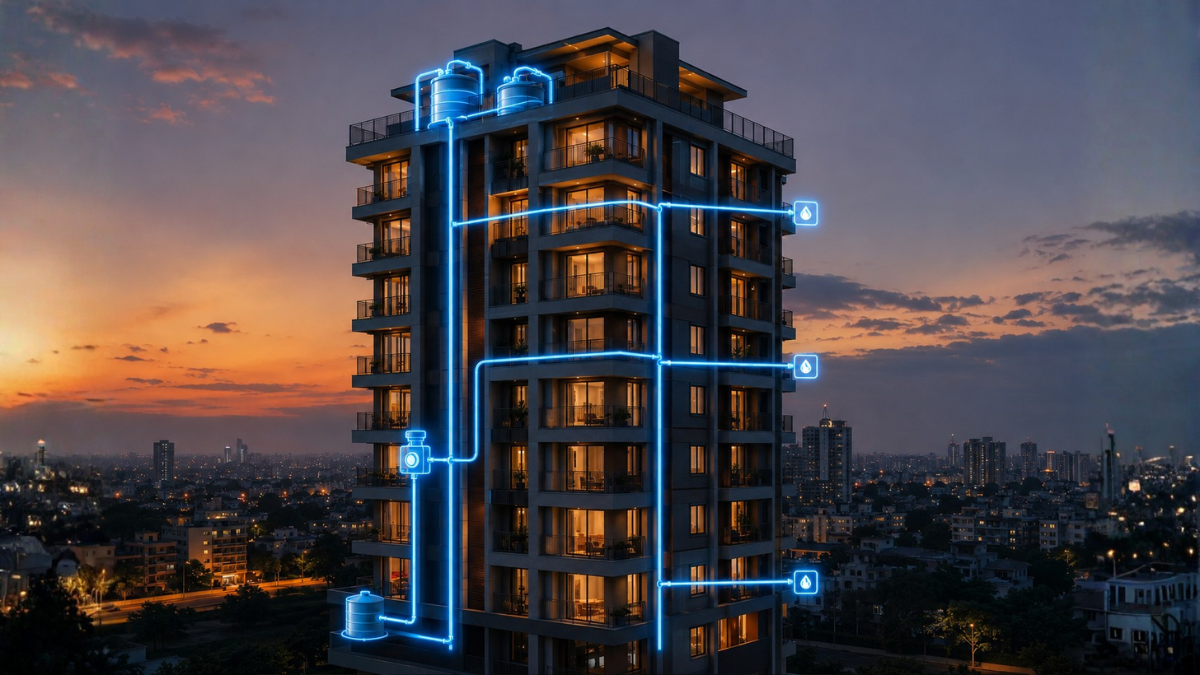
Consider the basics of how water moves through a typical Indian residential building. A borewell or municipal connection fills the underground sump. A pump moves that water to an overhead tank. From there, gravity (or pressure) distributes it across the floors. It sounds simple. But the failure points are everywhere.
A smart water management system addresses each of these points:
Automatic pump control ensures the motor only runs when needed. When the overhead tank is full, it stops. When the sump runs dry, it stops again, protecting the motor from dry-run damage that silently kills pumps over time. This alone can extend pump life significantly and cut electricity consumption.
Real-time level monitoring gives building managers and residents visibility into both the sump and overhead tank levels at any moment. No more guessing. No more manually climbing to the terrace to check.
Dry-run protection is non-negotiable in Indian conditions where municipal water supply can be erratic. A pump that runs without water doesn’t just burn out; it can cause serious damage to the motor windings and reduce the equipment’s lifespan to a fraction of what it should be.
Overflow prevention stops tanks from spilling over, a wastage that’s almost entirely avoidable yet extraordinarily common across residential buildings.
Why Modern Buildings Can’t Afford to Ignore This
The nature of buildings is changing. Apartment towers are taller. Campuses are larger. Regulatory expectations around water conservation are tightening. And the people living and working in these spaces expect things to just work.
Building managers face pressure from multiple sides: residents who want consistent water pressure, RWAs who want lower maintenance bills, and local bodies pushing for responsible resource use. A pump that burns out at midnight, or an overnight overflow that floods a terrace, creates the kind of crisis that falls squarely on the facility team’s shoulders.
Smart water management shifts the equation. Instead of reactive firefighting, building teams move to proactive control. Alerts come in before failures happen. Systems respond automatically to changing conditions. Records are maintained without someone walking around with a clipboard.
For housing societies with older infrastructure, this upgrade is often more affordable than expected, especially when weighed against the recurring cost of pump repairs, inflated electricity bills, and the occasional expensive emergency.
The Energy Connection
Water and electricity are deeply linked in any building. Every litre of water that moves through a building uses electricity to get there. When water is wasted, so is the energy used to pump it.
Oversized pumps running inefficiently, motors cycling on and off due to poor pressure management, pumps running dry and drawing current without moving water, these aren’t rare scenarios. They’re everyday realities in buildings without proper water management systems.
Bringing intelligence to water management directly reduces electricity consumption. That shows up in the monthly bill. Over a year, the savings in a mid-sized apartment complex can be substantial, often enough to recover the cost of the system several times over.
What to Look for in a Water Management Solution
Not all water controllers are created equal. Here’s what actually matters when evaluating a system for a modern building:
Protection first. Dry-run protection, overflow cutoff, and phase-failure protection are baseline requirements. These protect both the equipment and the water supply. A system that can detect when a phase is missing and prevent motor damage in three-phase pump setups is particularly important in areas with unstable power supply.
Automation that makes sense. Full automation works in most conditions, but the ability to switch to manual control when needed gives building teams confidence that they’re always in control.
Minimal wiring and easy installation. A system that requires tearing apart existing panels and rewiring everything is a barrier. Good solutions integrate cleanly with existing setups.
Durability. Water management equipment lives in utility rooms and on terraces, not in controlled office environments. The components need to handle heat, humidity, and the occasional surge.
Multifunction capability. The best systems handle multiple tanks, multiple pumps, and multiple scenarios from a single controller, rather than requiring a patchwork of separate devices.
A Shift in How We Think About Water
There’s something deeper happening beyond the technology. The buildings being built and retrofitted today are being designed with a different understanding of resources. Water is not infinite. Power is not cheap. And the people responsible for running these buildings are being held to higher standards than before.
Smart water management is part of a broader shift toward buildings that are genuinely intelligent about how they use what they consume. It’s not about having the latest gadget. It’s about running a building the way it should be run, efficiently, reliably, and with minimal waste.
For building developers, facility managers, and housing societies looking at what to prioritise in the year ahead, water management deserves a place at the top of that list. The payback is real, the technology is proven, and the consequences of inaction keep showing up in the maintenance register.
Evolve designs smart water and power management solutions built specifically for Indian conditions. From residential buildings to commercial complexes, our controllers protect pumps, prevent overflow, and give facility teams the control they need. Explore our range of water management solutions at evolve.ind.in.