Ask any property manager what keeps them up at night, and water problems are almost always on the list. Not the big dramatic stuff, either; it's usually something small. A toilet that's been quietly running for three weeks. A sprinkler head pointed at the parking lot instead of the grass. A slow drip behind a
Ask any property manager what keeps them up at night, and water problems are almost always on the list. Not the big dramatic stuff, either; it’s usually something small. A toilet that’s been quietly running for three weeks. A sprinkler head pointed at the parking lot instead of the grass. A slow drip behind a washing machine that nobody notices until there’s a water stain on the ceiling of the unit below.
I’ve talked to enough people in property management to know the pattern by now: the water bill goes up, nobody can figure out why, and by the time someone finds the actual leak, it’s already cost a few thousand dollars in damage. It doesn’t have to go that way. A handful of smart water management solutions can catch these issues early, or stop them from happening in the first place. Here are five worth putting on your radar.
1. Smart Water Meters
Regular water meters are kind of useless in the moment. They tell you how much water got used, but only after the fact, usually a full billing cycle later. By then, whatever caused the spike has probably been running for weeks.
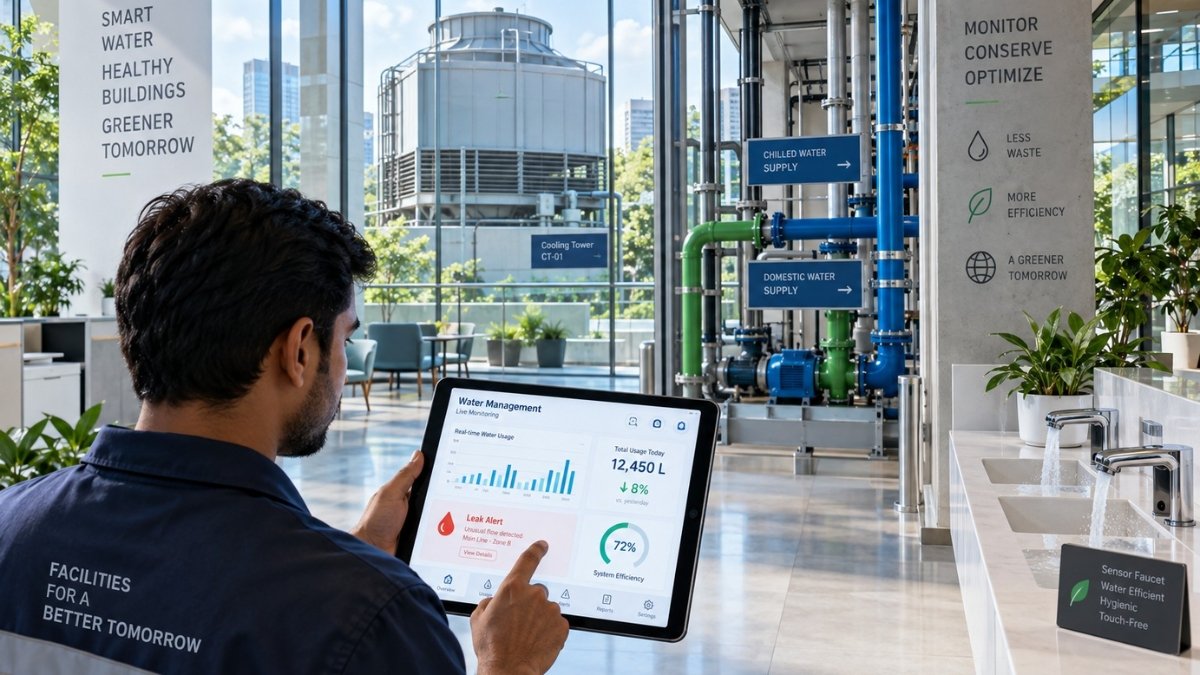
Smart meters fix that. They track usage as it happens and flag anything unusual, like a toilet that won’t shut off or a pipe leaking at 3 am when nobody’s around to notice. For a building with dozens of units, this is honestly one of the more useful water management solutions out there, mostly because it turns “we’ll find out next month” into “we found out this morning.” That’s a big deal when water damage is involved.
2. Leak Detection Sensors
Here’s the thing about leaks: they rarely show up all at once. They start small. A little moisture under the kitchen sink. A drip near the water heater that nobody checks because, well, why would you check it?
Cheap battery-powered sensors placed near appliances, water heaters, and under sinks can pick up on that moisture almost immediately and send an alert straight to maintenance. Some of the fancier setups will even shut the water off automatically before things get out of hand. It’s not a glamorous upgrade, but it’s the kind of thing that pays for itself the first time it stops a flooded unit.
3. Low-Flow Fixtures
Not every fix needs to be high-tech. Sometimes it’s as simple as swapping out old showerheads and toilets for low-flow versions. People assume this means weaker water pressure and a worse shower, but that’s not really true anymore; the newer fixtures are designed to feel normal while using a fraction of the water.
Multiply those savings across a hundred units, and it adds up quickly. It’s one of the cheapest, least disruptive water management solutions on this list, and a lot of utility companies will even chip in with a rebate to help cover the cost of upgrading. Worth checking before you buy.
4. Smart Irrigation
If your complex has any landscaping at all, there’s a decent chance the sprinklers are running on autopilot, literally. Set schedule, same days, same times, rain or shine. Which means you’re probably watering the lawn during a downpour at least a few times a year.
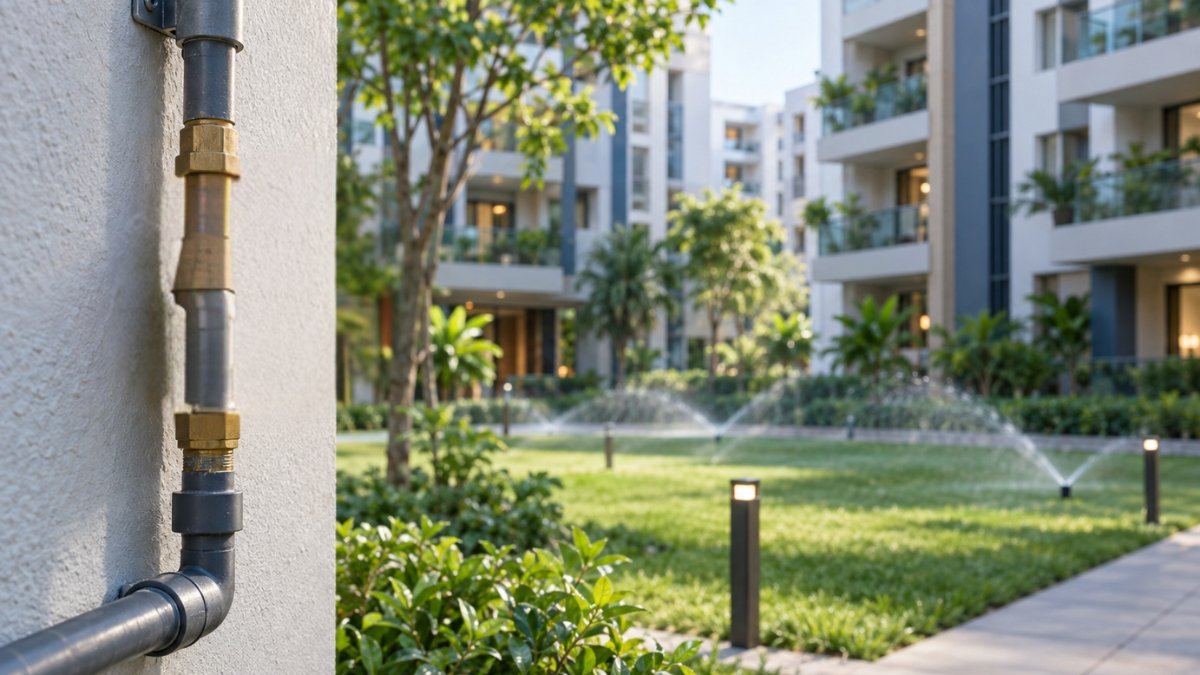
Smart irrigation controllers pull in local weather data and soil moisture readings and adjust on their own. Rained yesterday? Skip today’s watering. Is soil already damp? Water less. It sounds like a small tweak, but outdoor watering is often one of the biggest water expenses on a property, so trimming it down actually moves the needle on the bill.
5. Water Audits, Done Regularly
None of the above matters much without someone actually checking on things every once in a while. A water audit, basically having someone walk the property and inspect the plumbing, irrigation, and appliances, catches the stuff sensors can’t. Corroded pipes. Aging valves. Equipment that’s technically still working but wasting water while it does.
The complexes that stay ahead of water problems tend to treat this as routine, not something they do after a disaster. Waiting for tenants to report issues means you’re always playing catch-up.
The Real Takeaway
None of these fixes are magic on their own. What actually moves the needle is layering a few of them together: smart meters catching the spikes, sensors catching the leaks, efficient fixtures cutting daily use, smart irrigation trimming the outdoor waste, and audits catching whatever slips through the cracks.
The cost of setting this up is almost always less than the cost of just one bad leak or one summer of wasted irrigation. At some point, investing in decent water management solutions stops being an upgrade and starts just being common sense.