A few months ago, a neighbour of mine parked his new electric scooter in the stilt area, plugged it into a socket near the water meter, and went upstairs to sleep. Nothing dramatic happened. But the next morning the charger had a faint burning smell, and the socket cover was slightly warped. He got lucky.
A few months ago, a neighbour of mine parked his new electric scooter in the stilt area, plugged it into a socket near the water meter, and went upstairs to sleep. Nothing dramatic happened. But the next morning the charger had a faint burning smell, and the socket cover was slightly warped. He got lucky. A lot of people don’t.
Electric two-wheelers are now a common sight in Indian cities, from Bengaluru and Pune to Coimbatore and Chennai. Delivery riders, college students and office-goers are all switching because the running cost is so low. But there’s one thing most buyers think about far too late: EV Charger Protection.
Why Charging Is the Riskiest Part of EV Ownership
Riding an electric scooter is simple. Charging it is where the electrical stress happens. Most two-wheelers are charged for four to six hours straight, often on ordinary wiring that was never designed for a load like that.
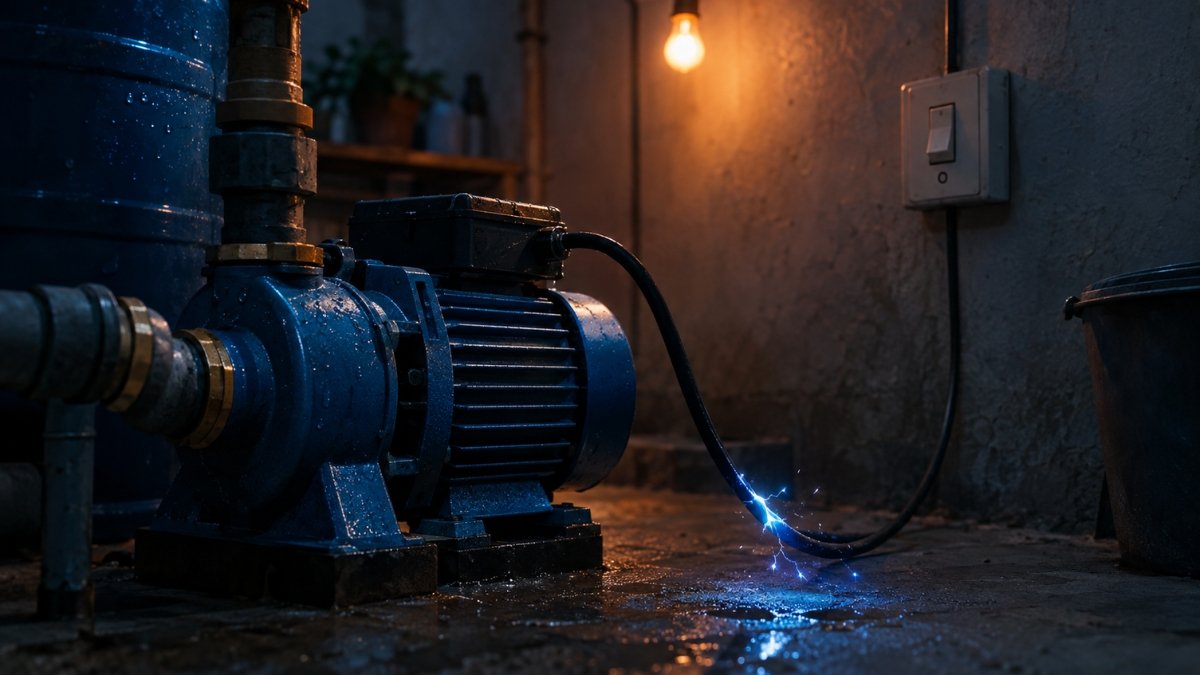
Add Indian grid realities to the mix: voltage that sags in the evening and jumps at night, a sudden spike when power returns after a cut, wiring with poor or missing earthing, and wet parking areas during the monsoon. Every one of these can damage a charger, a battery, or, in the worst case, put a person at risk.
The Four Power Problems You Can’t See
Power surges. When electricity returns after an outage, a spike can fry the charger’s circuit board and stress the battery system.
Over-voltage. If supply voltage climbs well above normal, charger components overheat and wear out faster, or fail outright.
Neutral failure. This is the dangerous one most people have never heard of. When the neutral connection breaks, phase voltage can reach appliances unpredictably, and a vehicle that should be getting 230V can suddenly see far more.
Earth leakage. Without proper earthing, a leakage fault has nowhere to go, and the vehicle body can become live. In a wet parking area, that’s a real shock hazard.
Ordinary sockets and extension boards do nothing about any of these.
Where the Evolve EP 101 Series Fits In
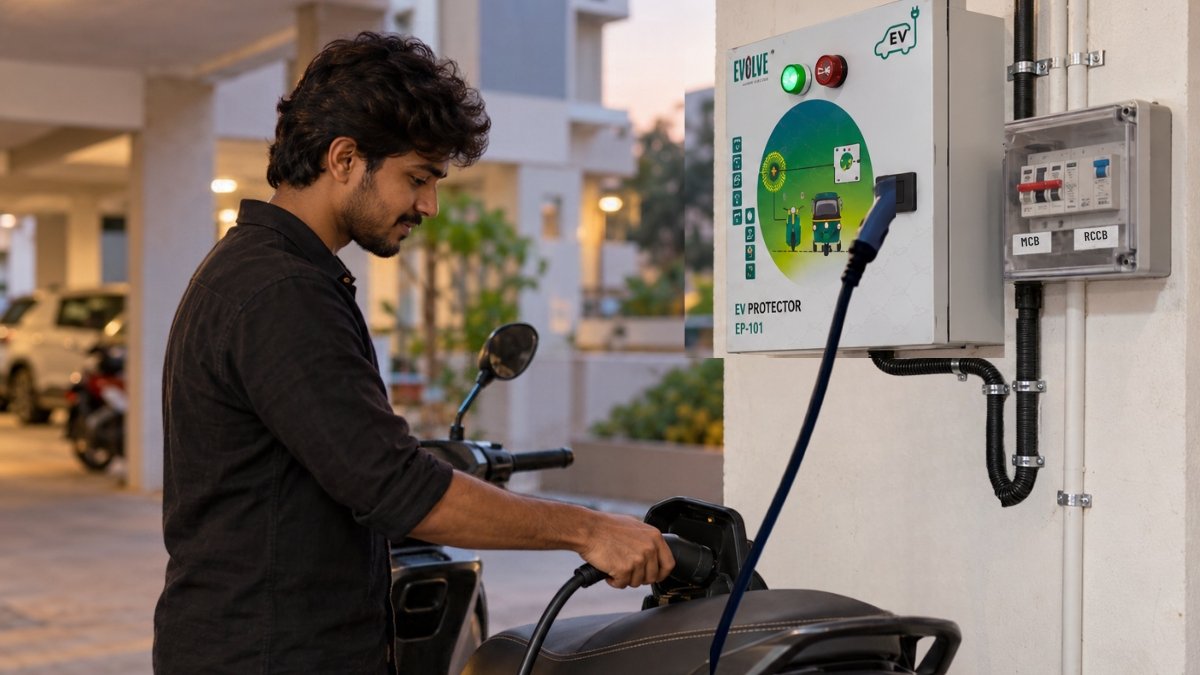
This is exactly the gap the Evolve EP 101 Series EV Protector is built to close. It is designed specifically for safeguarding electric vehicles during charging, looking after both the user and the equipment.
Here’s what it handles:
- Surge protection, shielding the charger from sudden spikes
- Over-voltage protection, cutting off supply before high voltage causes damage
- Neutral failure protection, guarding against one of the most overlooked power faults
- Earth leakage protection, helping prevent shock and accident risks
Instead of fitting four separate devices and hoping they work together, you get comprehensive coverage in one intelligent unit. And because it is built for commercial EV charging environments, it is made for continuous, dependable use, not occasional light duty.
Why This Matters for Apartments, Fleets and Charging Stations
For a single owner, good EV Charger Protection is about peace of mind. For shared spaces, it’s about responsibility.
Housing societies are still deciding how to handle EV charging, and many are nervous, with good reason. A protected charging point answers the biggest safety concerns and makes it easier to say yes to residents.
Delivery fleets and commercial charging stations have even more at stake. Downtime means lost income, and a single power-related accident can mean damaged vehicles, injured people, and a damaged reputation. Commercial-grade protection keeps charging running without interruption.
Good Habits Still Count
No device replaces common sense. Use the original charger, avoid extension boards, keep flammable items away from the charging point, check cables for wear every few weeks, and don’t charge a battery that is swollen or unusually hot. Think of the protector as your safety net, and good habits as the first line of defence.
Built for the EV Future
India’s electric vehicle numbers will keep climbing. More scooters, more chargers, more shared charging spaces. The infrastructure around them needs to be as ready as the vehicles are.
Intelligent protection is what allows the EV revolution to grow with confidence. It’s not only about guarding a charger. It’s about making sure every charge is safe for the vehicle, the building, and the person plugging in.
So before you plug in tonight, ask yourself one simple question: what happens if the power misbehaves while I’m asleep? If you don’t have a confident answer, the Evolve EP 101 Series is a sensible place to start.