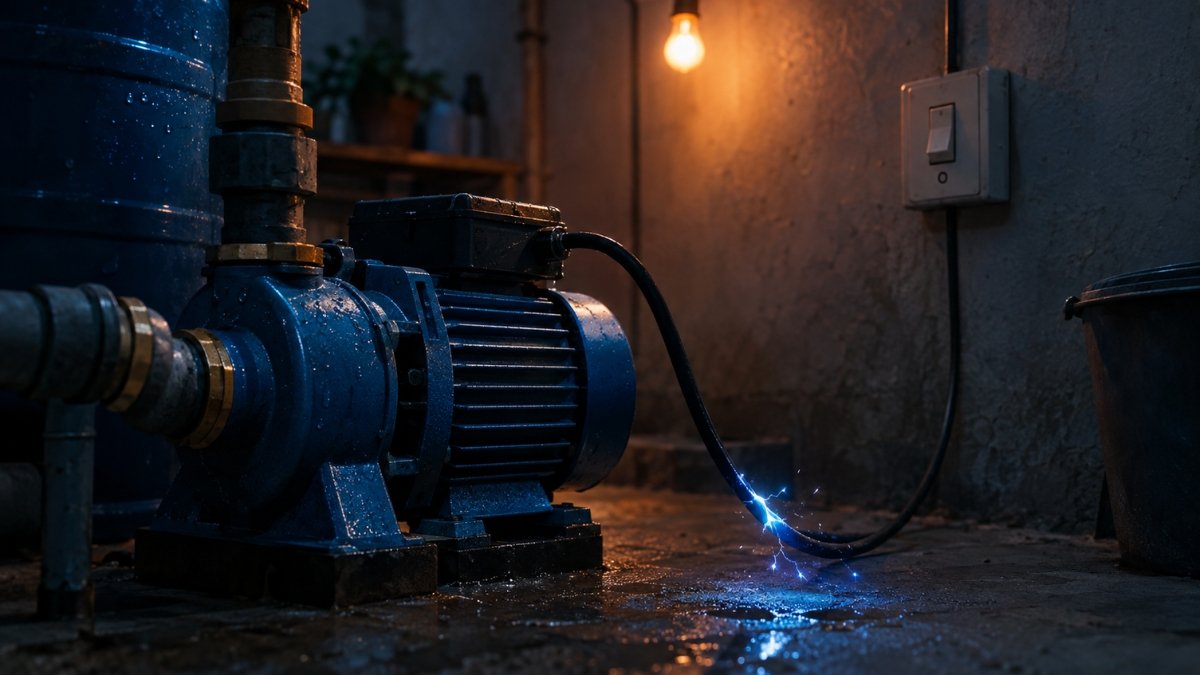
Most of us think of a water pump as a simple machine. Flip the switch, water flows. Flip it off, and the pump rests until you need it again. It would be nice if it worked that way. Over the years, I've seen plenty of pumps die for no obvious reason. No dry run, no
Most of us think of a water pump as a simple machine. Flip the switch, water flows. Flip it off, and the pump rests until you need it again.
It would be nice if it worked that way. Over the years, I’ve seen plenty of pumps die for no obvious reason. No dry run, no overload, no neglect. The common thread was usually the same: power cuts, and what happened around them.
Here’s what’s going on behind the scenes.
The Real Trouble Starts When the Power Comes Back
The outage itself is rarely the villain. The moment of return is.
When electricity comes back after a cut, the grid doesn’t politely ease in. Voltage often jumps for a few seconds, sometimes well above normal, before it settles. Everyone’s fridges, ACs, and motors restart at once, and the supply gets jittery.
Your pump’s motor windings and capacitor take that hit directly. One spike won’t kill it. But repeated spikes slowly cook the insulation on the copper windings, and one day the motor simply burns out. People say “it suddenly stopped working.” It wasn’t sudden. It was years of small injuries.
“But I Switched It Off!”
This is the part that surprises people. Turning the pump off at its own switch doesn’t mean it’s safe.
If the pump is still connected to the mains, a surge can still travel down the wire. The switch only breaks the circuit on one side in many setups. The starter, the control panel, and any electronic board are still exposed to whatever comes through the line, and lightning-related surges are especially nasty. Those components are often the first thing to fail, and the motor gets blamed for it.
Pulling the plug or turning off the main breaker during a storm or a long outage is the only real isolation.
The Pump You Forgot to Switch Off
The opposite case is even more common. The power goes out while the pump is running, and nobody thinks to turn it off. When power returns, it restarts on its own, whether or not there’s water to pump.
Consider what happened in between. The overhead tank may have emptied, or the borewell level may have dropped. The pump kicks in and runs dry. Water is what cools a pump and lubricates its seals. Without it, the heat builds fast, seals crack, and the impeller can seize in minutes.
Many pump failures are really dry-run failures in disguise, and a power cut was the trigger.
Brownouts: The Silent Killer
Not every power problem is a full cut. Low voltage is arguably worse, because it feels like everything is fine. The lights are dim but on, so you carry on.
When voltage drops, a motor tries to deliver the same work by drawing more current. More current means more heat. The pump hums harder, runs hotter, and ages faster. Run it like this regularly, and the winding insulation breaks down long before it should.
What Happens When a Pump Sits Idle
Long outages have one more side effect. A pump that sits unused for days, especially in humid weather, starts to deteriorate in quiet ways:
- Seals dry out and lose flexibility, then leak when the pump restarts.
- Rust and scale lock the impeller or shaft.
- Moisture settles into the terminal box and electrical parts, setting up short circuits.
- Stagnant water in the casing leaves sediment behind.
When power returns, a stuck motor tries to start against that resistance and draws a huge current. That’s a classic way to burn out a motor in seconds.
Water Hammer: The Shock You Don’t See
When power suddenly cuts, the water in the pipe doesn’t stop instantly. It slams back against the closed check valve. That sudden jolt is called water hammer, and over time it loosens joints, cracks pipes, and strains the pump’s internals. It’s the thud you sometimes hear after the lights go out.
So What Can You Actually Do?
You don’t need to be an engineer to protect your pump. A few habits go a long way:
- Turn the pump off during outages, or install an auto-cutoff so it doesn’t restart on its own.
- Use a voltage protector or stabiliser to block spikes and low-voltage conditions.
- Add a dry-run protection device if your water source can run low.
- Fit a time delay relay so the pump waits a minute or two after power returns, letting the supply settle.
- Install surge protection if you live somewhere with frequent storms.
- Run the pump briefly every week or two if it’s been idle, and keep the terminal box dry.
- Use a quality non-return valve to reduce water hammer.
Think Bigger Than Just the Pump
A pump doesn’t fail in isolation. It’s part of a system: the supply, the tank, the controls, and the power behind it all. This is where proper Water and power management solutions come in. Instead of fixing damage after it happens, these setups coordinate water levels, automatic switching, and electrical protection, so the pump only runs when conditions are right and stays protected when they aren’t.
For anyone whose pump has failed more than once, or who lives where outages and voltage swings are routine, investing in Water and power management solutions usually costs far less than replacing a motor every couple of years.
The Takeaway
A pump rarely dies because of one dramatic event. It wears down through small, repeated stresses: a spike here, a dry run there, a brownout every evening. Power cuts are the thread running through nearly all of them, and “switched off” doesn’t mean “safe.”
Treat your pump like you’d treat any expensive appliance, with a little protection and a little attention. It’ll repay you with years of quiet, reliable water.