There's nothing quite as annoying as standing in the shower, covered in soap, while the water trickles out like it's doing you a personal favor. Or turning on two faucets at once and watching both of them practically give up. If any of that sounds familiar, you might be dealing with a low water pressure
There’s nothing quite as annoying as standing in the shower, covered in soap, while the water trickles out like it’s doing you a personal favor. Or turning on two faucets at once and watching both of them practically give up. If any of that sounds familiar, you might be dealing with a low water pressure problem that a simple fix, a pressure booster pump, can solve.
But before you go out and buy one, it’s worth understanding what these pumps actually do, and more importantly, whether your home even needs one. Not every plumbing issue is a pressure issue, and not every pressure issue needs a pump. So let’s break it down.
What Exactly Is a Pressure Booster Pump?
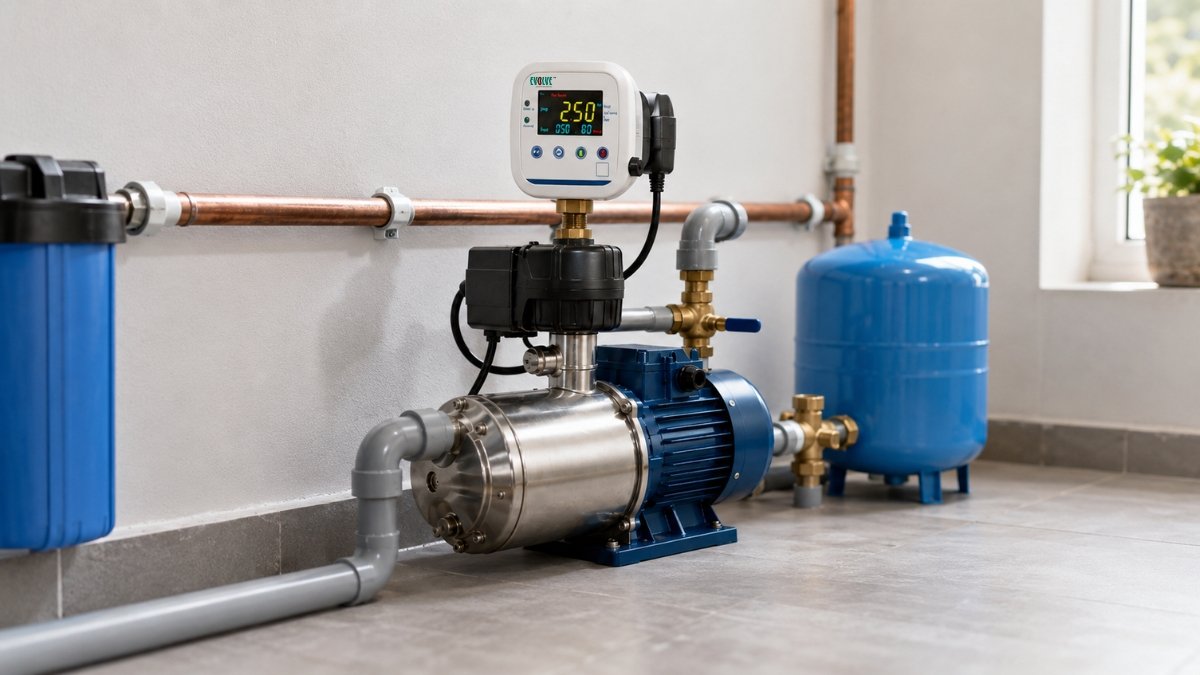
In simple terms, a pressure booster pump is a mechanical device installed in your home’s plumbing system to increase water pressure. It pulls water from your main supply line and pushes it through your pipes with more force, so it reaches every faucet, shower, and appliance at a consistent, usable pressure.
These pumps are especially common in homes that sit at the top of a hill, in multi-story buildings where water has to travel upward against gravity, or in areas where the municipal water supply just isn’t that strong to begin with. They’re also popular in homes that rely on well water, since well pressure can be unpredictable depending on the pump, tank size, and depth of the well.
Now, onto the real question: how do you know if you actually need one?
1. Your Water Pressure Drops When You Use More Than One Fixture
This is probably the most common sign, and the one most people notice first. You’re washing dishes, someone flushes the toilet upstairs, and suddenly your sink water slows to a dribble. Or you’re in the shower, and the washing machine kicks on, and your water pressure tanks.
This happens because your home’s plumbing system simply doesn’t have enough pressure to serve multiple fixtures at once. A single pressure booster pump installed at your main water line can solve this by maintaining consistent pressure throughout the house, no matter how many taps are running at the same time.
2. Upper Floors Get Noticeably Weaker Water Pressure
If you live in a two-story or multi-story home, pay attention to whether the pressure upstairs feels weaker than downstairs. This is a classic sign of gravity working against your plumbing. Water has to travel up against gravity to reach the second or third floor, and if your system isn’t strong enough to begin with, that upward journey eats into the pressure even more.
Booster pumps are commonly installed specifically to counter this effect, pushing water upward with enough force that your top-floor shower feels just as strong as the one on the ground floor.
3. Your Water Heater Struggles to Keep Up
Low pressure doesn’t just mean slow water; it can also throw off your water heater’s performance. If your hot water takes forever to reach the tap, or the temperature fluctuates randomly while you’re using it, weak incoming pressure could be part of the issue. Water heaters, especially tankless ones, often need a minimum flow rate to function properly, and if the pressure coming in is too low, they may struggle to heat water efficiently or consistently.
4. You Notice It More After a Renovation or New Fixture Installation
Sometimes low pressure isn’t a pre-existing issue; it shows up after you’ve added something new to your home. Installing a rainfall showerhead, a multi-jet shower system, a second bathroom, or even just upgrading to modern fixtures with tighter flow restrictors can expose weaknesses in your existing water pressure that you never noticed before.
If your plumbing worked fine before the renovation but feels underpowered now, it’s not that your pipes suddenly got worse; it’s that your new fixtures are demanding more than your system can naturally provide. This is one of the more overlooked reasons homeowners end up installing a pump after a remodel.
5. Your Municipal Supply or Well Just Doesn’t Deliver Enough Pressure
Sometimes the issue isn’t your home at all; it’s what’s coming in from the source. If you’re on a municipal system, pressure can vary depending on your location relative to the water treatment plant, elevation, and how many other households are drawing from the same line during peak hours. If you’re on a well, pressure depends heavily on your well pump’s condition, tank size, and depth.
You can actually test this yourself with a simple pressure gauge attached to an outdoor spigot. Most homes should sit somewhere between 40 and 60 psi. If you’re consistently reading below 40, that’s a strong sign the incoming supply itself is the bottleneck, and a booster pump would genuinely help rather than just masking a different problem.
So, Do You Actually Need One?
If you’re nodding along to two or more of these signs, there’s a good chance a pressure booster pump would make a noticeable difference in your daily life. That said, it’s worth ruling out other causes first; clogged pipes, a partially closed main shutoff valve, or a failing pressure regulator can all mimic the same symptoms without a pump being the right fix.
A quick pressure test, and maybe a call to a plumber if you’re unsure, can save you from installing equipment you didn’t actually need. But if your pressure truly is low at the source, a booster pump is one of the most reliable ways to get your water, hot or cold, upstairs or down, flowing the way it should.
At the end of the day, nobody wants to feel like they’re fighting their own plumbing just to rinse the shampoo out of their hair. If that’s been your reality, it might be time to look into a pump.