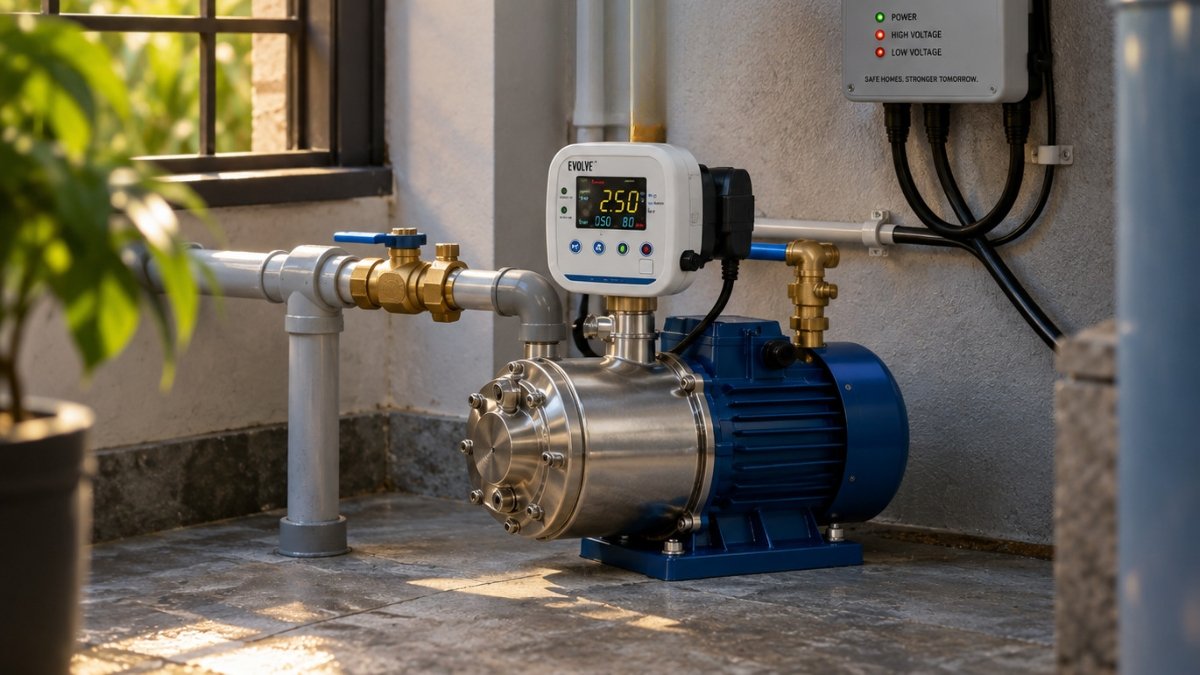
I got a call last year from a friend whose water pressure kept dropping and surging like clockwork, mostly in the evenings. He was convinced his pump was junk and ready to buy a new one. Turned out the real problem was his neighborhood's grid getting hammered every evening when everyone came home and cranked
I got a call last year from a friend whose water pressure kept dropping and surging like clockwork, mostly in the evenings. He was convinced his pump was junk and ready to buy a new one. Turned out the real problem was his neighborhood’s grid getting hammered every evening when everyone came home and cranked their ACs. His pressure booster pump wasn’t broken. It was just tired of fighting bad power every single day.
That’s the thing nobody tells you when you buy one of these pumps. Everyone talks about pipe size, flow rate, tank pressure, all that stuff. Almost nobody talks about what unstable electricity does to the motor sitting inside that pump housing, quietly grinding itself down.
Why This Even Matters
A pump motor is built to run on a certain voltage. Manufacturers test them at that number, warranty them around that number, basically design the whole thing assuming your wall outlet behaves itself. When the voltage drifts too far up or down from what the motor expects, something has to compensate, and that something is almost always current draw going up. More current, more heat. More heat, shorter life. It’s not complicated once you see it laid out, but most people never connect the dots because the damage doesn’t show up right away. It shows up two years later as a “random” failure.
Where Bad Voltage Actually Comes From
A few usual suspects:
Your utility company is juggling load across your whole area, and if a lot of people draw power at once, voltage sags. This happens more in summer, more in older neighborhoods, more if you’re at the far end of a distribution line.
Old wiring is another big one. If the wire feeding your pump is thinner than it should be, or has degraded over the years, it just can’t push consistent voltage through, especially under load.
Sharing a circuit with something power-hungry, like a water heater or washing machine, causes dips too. The pump and the appliance are basically fighting over the same electrical lane.
And if you’re running things through a cheap inverter or a generator during outages, that power is often dirtier than what comes straight from the grid. Some generators produce voltage that swings more than people realize.
What This Does To The Pump, Piece By Piece
The motor windings take the first hit. Low voltage means the motor pulls extra current to keep torque up, and that extra current turns into heat inside the windings. Heat breaks down the insulation coating on those windings over time. Once that insulation starts failing, you’re looking at a motor that’s basically living on borrowed time.
Capacitors don’t like spikes. A lot of these pumps use capacitors to help the motor start smoothly. A sudden voltage spike, even one that lasts a fraction of a second, can push a capacitor past what it’s rated for. It won’t die instantly, but it weakens, and a weakened capacitor is exactly why some pumps start struggling to kick on.
Control boards get confused. Newer pressure booster pumps have little electronic brains managing pressure sensing and auto shutoff. Feed that board unstable voltage and it can misread what’s happening, trip when it shouldn’t, or in bad cases just fry a component outright.
Bearings wear out faster than they should. A motor running on rough voltage tends to vibrate more. More vibration means more friction on bearings and seals. That’s how you end up with a pump that starts leaking or making noise way earlier than the spec sheet promised.
Put all four of those together and a pump rated for ten years can start falling apart in four or five. Nobody warns you about that on the box.
Signs Yours Might Already Be Struggling
- It hums for a second before actually starting up
- Pressure jumps around even though nobody’s using much water
- The motor housing feels hot when you touch it
- You keep hearing a click from what’s probably a thermal cutoff
- It shuts off on its own and needs a manual reset to come back
If you’re nodding along to more than one of these, don’t jump straight to “the pump is defective.” Check your power first. I’ve seen people replace a perfectly good pump because they never thought to test the voltage at the outlet.
What Actually Helps
A voltage stabilizer is honestly the fix that matters most here. It sits between the wall and the pump and smooths out the swings before the motor ever feels them. If you only do one thing from this list, do this one.
Give the pump its own circuit if you can. Sharing a line with big appliances is asking for trouble.
Have someone check the wiring gauge, especially in older homes. Wire that was fine for a smaller pump decades ago might not cut it now.
Add surge protection, particularly if you live somewhere that gets thunderstorms or has a history of grid hiccups.
Don’t skip maintenance just because the voltage side is handled. Motors still need cleaning, lubrication, and someone eyeballing the wiring connections now and then.
And if you’re shopping for a new pump anyway, look for one with built-in over/under-voltage protection. It costs a little more upfront and saves you a lot of grief later.
Bottom Line
Your pressure booster pump doesn’t operate in a vacuum. It’s completely dependent on the quality of the electricity you’re feeding it, and most people never think about that until something breaks. A stabilizer, a dedicated circuit, and some basic upkeep will do more for that pump’s lifespan than almost anything else you could spend money on. If yours has been acting weird lately and you’ve ruled out the obvious mechanical stuff, take a look at your power before you write the pump off as dead.