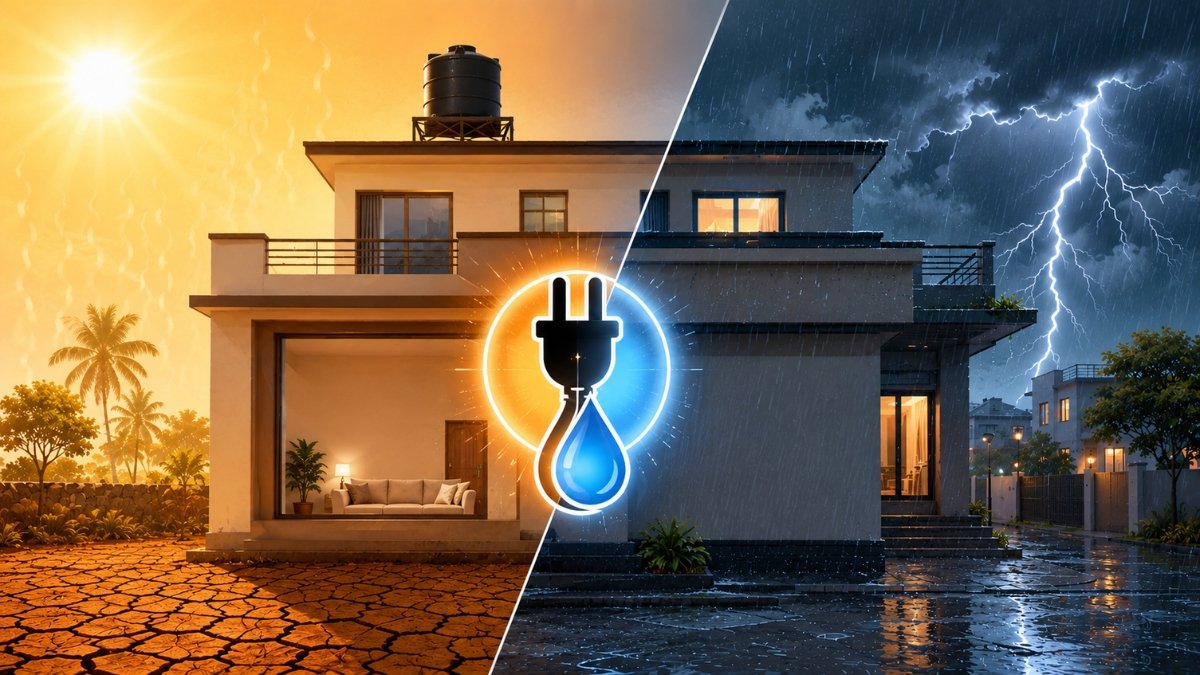
If you've lived through a few Indian summers and monsoons, you already know that these two seasons throw completely different problems at your home. Summer bakes your appliances and drains your water sources dry. Monsoon floods your surge circuits with humidity, power fluctuations, and the occasional lightning-triggered spike that fries a gadget in a split
If you’ve lived through a few Indian summers and monsoons, you already know that these two seasons throw completely different problems at your home. Summer bakes your appliances and drains your water sources dry. Monsoon floods your surge circuits with humidity, power fluctuations, and the occasional lightning-triggered spike that fries a gadget in a split second.
Most homeowners react to these problems after they happen, after the inverter battery dies in May, or after the mixer grinder stops working following a thunderstorm in July. But with a little planning and the right water and power management solutions, you can actually get ahead of both seasons instead of constantly repairing the damage they leave behind.
Here’s a practical, season-by-season look at what each one does to your home systems, and how to protect yourself before the weather forces your hand.
Why Summer and Monsoon Attack Your Home So Differently
It helps to understand what’s actually going wrong before you try to fix it.
Summer stress is mostly about heat and scarcity. Water tables drop, motors overheat, and electrical systems work overtime to keep fans, coolers, and ACs running non-stop. The strain isn’t sudden; it builds up gradually over weeks, wearing down components that were already close to their limit.
Monsoon stress is the opposite. It’s sudden, unpredictable, and often violent. Voltage fluctuations from grid instability, water seepage into wiring, and power surges from lightning strikes can damage expensive appliances in seconds. Where summer wears things down slowly, monsoon can knock them out instantly.
That’s why a single, generic approach to home protection doesn’t really work. You need a strategy that adapts to what’s actually threatening your systems at that time of year.
Summer: Managing Heat, Water Scarcity, and Overworked Systems
The Water Problem
Summer in most parts of India means one thing for water systems: everything runs harder for less. Borewells strain, municipal supply becomes irregular, and storage tanks that were fine all winter suddenly can’t keep up with daily demand.
This is where good water management solutions actually save you money and stress. A few things worth doing before peak summer hits:
- Get your storage tanks cleaned and inspected. Sediment buildup over the year reduces effective storage capacity right when you need every liter.
- Check pump motors for wear. Motors working against lower water tables draw more current and heat up faster, a leading cause of summer motor burnouts.
- Consider a water level controller. These prevent your pump from running dry, which is one of the fastest ways to damage a motor during scarcity months.
- Fix leaks now, not later. A slow leak that’s tolerable in monsoon becomes a real loss when water is scarce.
The Power Problem
Summer power problems come from continuous appliance use. ACs, coolers, refrigerators, and fans run for hours without breaks, and that constant load raises the risk of overheating, voltage instability, and appliance wear.
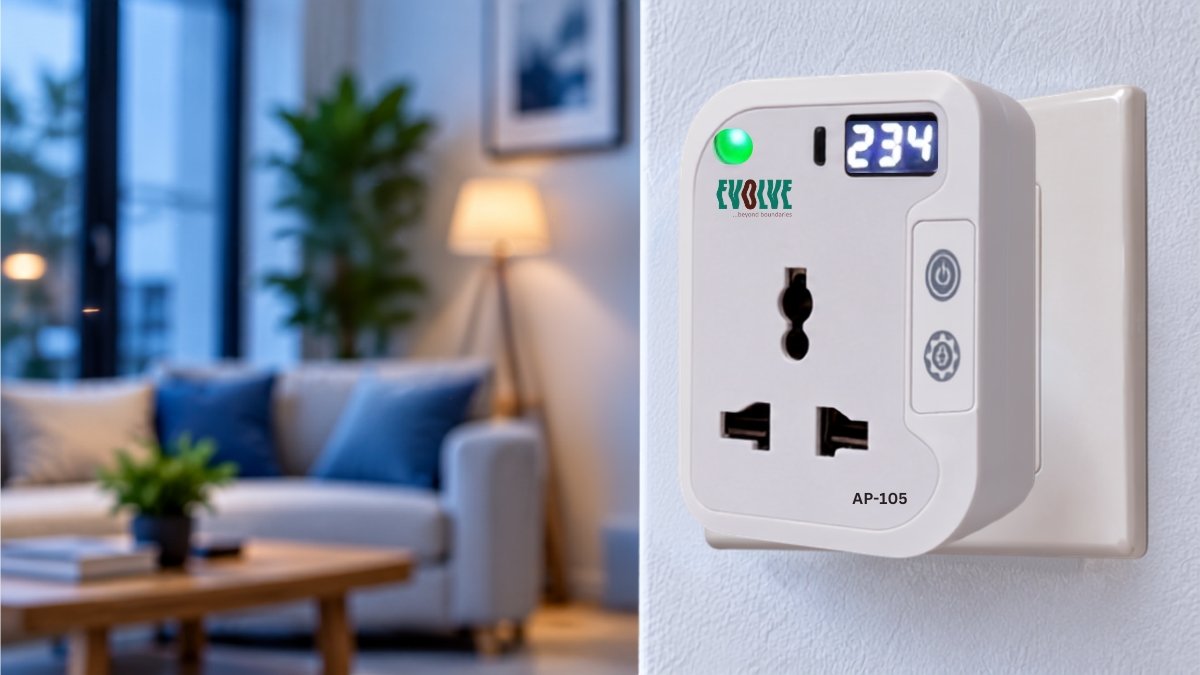
This is exactly the scenario a good appliance protection plug is built for. Unlike a basic extension board, a proper protection plug monitors voltage and current continuously, cutting off power the moment it detects something abnormal, before your compressor or motor takes the hit. If you’re running expensive appliances like ACs, refrigerators, or washing machines for extended hours, pairing them with dedicated protection is a small investment against a very expensive repair.
Monsoon: Managing Moisture, Surges, and Unpredictable Power
The Power Problem
This is where monsoon does the most damage, and where most households are underprepared. Thunderstorms cause voltage spikes. Grid instability during heavy rain causes fluctuations. And a single lightning-adjacent surge can travel through your wiring and take out a TV, router, refrigerator, or computer in an instant, often without warning.
This is precisely why surge protection matters so much more in monsoon than any other season. A dedicated power protection plug acts as the first line of defense, absorbing sudden voltage spikes before they reach your appliance. For higher-value electronics, computers, entertainment systems, and kitchen appliances, this isn’t an optional accessory; it’s basic insurance.
A few monsoon power habits worth building:
- Unplug non-essential appliances during active thunderstorms, even with surge protection in place.
- Use protection plugs on every major appliance, not just your most expensive one; smaller appliances fail just as often.
- Get your earthing checked annually. Poor earthing is one of the most common reasons surge protection doesn’t perform as expected.
- Watch for flickering lights or appliance resets, early signs of grid instability that suggest it’s time to inspect your setup.
Building a Year-Round System, Not a Seasonal Panic Response
The real shift in mindset here is moving from reactive fixes to a home protection system that works across both seasons. That means:
- Auditing your home twice a year, once before summer, once before monsoon, checking water systems, wiring, and appliance connections.
- Investing in decent protection hardware once, rather than replacing burned-out appliances repeatedly. A quality appliance protection plug or power protection plug typically costs a fraction of what a single damaged appliance would cost to repair or replace.
- Treating water and power together, not separately. Many monsoon electrical failures actually start with water seepage, and many summer motor failures start with electrical strain; the two systems are more connected than most people assume.
- Document what breaks each year. If the same appliance or pipe fails every season, that’s a sign of a deeper issue worth fixing permanently rather than patching repeatedly.
The Bottom Line
Summer and monsoon aren’t just different weather; they’re different sets of risks to the same home systems. Summer tests your water supply and pushes your appliances to their thermal limits. Monsoon tests your wiring, your drainage, and your ability to handle sudden, unpredictable power events.
The homes that come out of both seasons undamaged aren’t lucky; they’re prepared. A little seasonal maintenance, combined with reliable surge protection and sensible water management solutions, is usually all it takes to turn “another summer of appliance failures” or “another monsoon power surge disaster” into a complete non-event.
Your home’s water and power systems work hard all year. Giving them the right protection at the right time is one of the simplest ways to ensure they keep working season after season.