It's 11 pm on a July night in Coimbatore, the kind where the monsoon clouds have been teasing all evening but haven't delivered a drop. The overhead tank in your independent house has been dry since afternoon, the motor's been switched on and off three times by hand, and somewhere in the middle of all
It’s 11 pm on a July night in Coimbatore, the kind where the monsoon clouds have been teasing all evening but haven’t delivered a drop. The overhead tank in your independent house has been dry since afternoon, the motor’s been switched on and off three times by hand, and somewhere in the middle of all that, a voltage fluctuation quietly takes out your refrigerator’s compressor. Meanwhile, three streets away, in a gated community, a resident is dealing with a different flavour of the same headache: a shared water pump that only runs on a fixed schedule decided by the association, and an EV charger in the basement parking that trips every other night because nobody accounted for the building’s actual power load.
Different houses, different headaches, same root problem.
Why This Isn’t Just an “Inconvenience”
We tend to treat water and power issues as background noise, something you complain about at dinner and forget by morning. But the actual cost adds up faster than most people realise. A single voltage spike can damage a motor pump worth ₹15,000 in seconds. A dry-run on a borewell motor because nobody noticed the tank ran empty can burn out a winding within minutes. And in apartment complexes, unequal water pressure between the 2nd floor and the 9th floor isn’t just annoying; it’s a recurring source of tension between neighbours and the managing committee.
The truth is, water and power management solutions aren’t a luxury add-on anymore. They’re closer to insurance, the kind you don’t think about until the one night you desperately need it.
Independent Houses: You’re on Your Own, For Better or Worse
If you live in a standalone house, you already know the deal: you’re the association, the maintenance staff, and the emergency contact, all rolled into one. That’s actually an advantage in one sense: you can act fast and customise everything to your exact setup. But it also means every gap in your system is entirely your problem to solve.
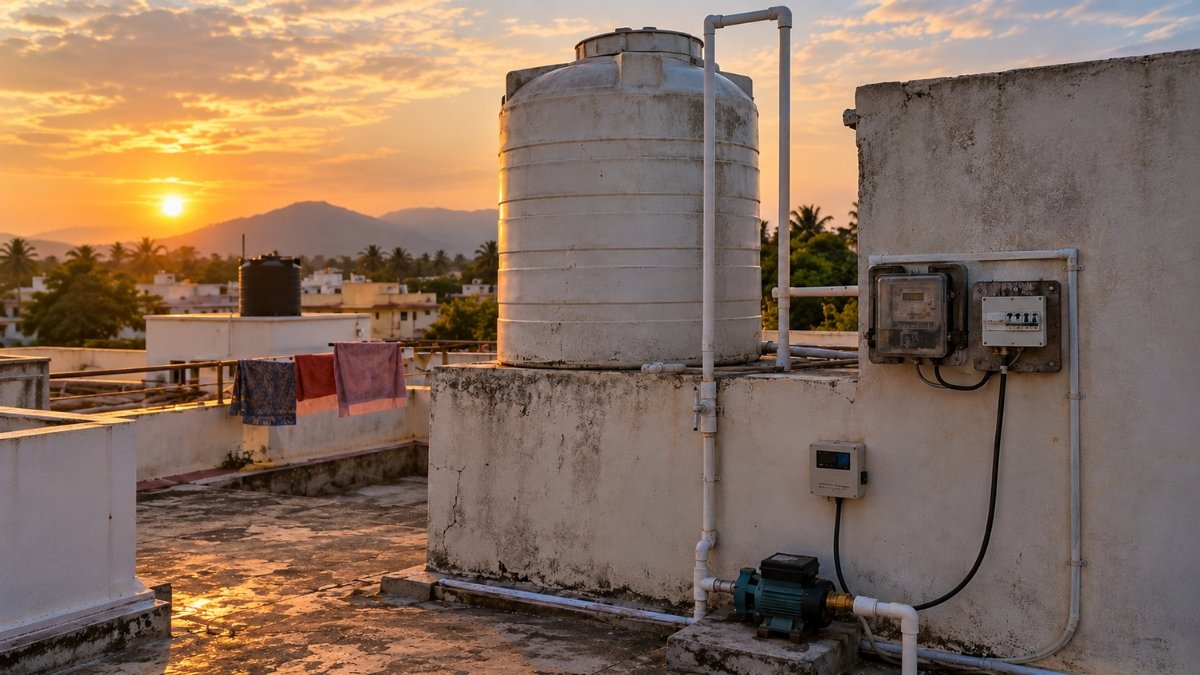
Most independent homes we’ve come across have some combination of a borewell or municipal line, an overhead tank, and a motor that someone has to manually switch. Add erratic voltage from the grid, especially common in semi-urban and outskirts areas around Coimbatore, and you’ve got a setup that’s constantly one unnoticed fluctuation away from an expensive repair.
Gated Communities: Shared Systems, Shared (and Multiplied) Problems
Apartments and gated communities flip the script. Water and power aren’t individual decisions anymore; they’re collective ones, usually managed by an association that’s juggling fifty other things. A single faulty phase in the incoming power supply can affect every flat on that line. A pump that’s undersized for the building’s actual demand means someone on the top floor is always showering under a trickle.
And now there’s a newer wrinkle: EVs. More residents are charging cars overnight in basement parking, often without the building’s electrical infrastructure being designed for that additional, sustained load. We’ve had committee members reach out asking, almost apologetically, “Is it normal for the charger to trip like this?” It usually isn’t; it’s just a system that was never built with today’s power draw in mind.
Where We Come In
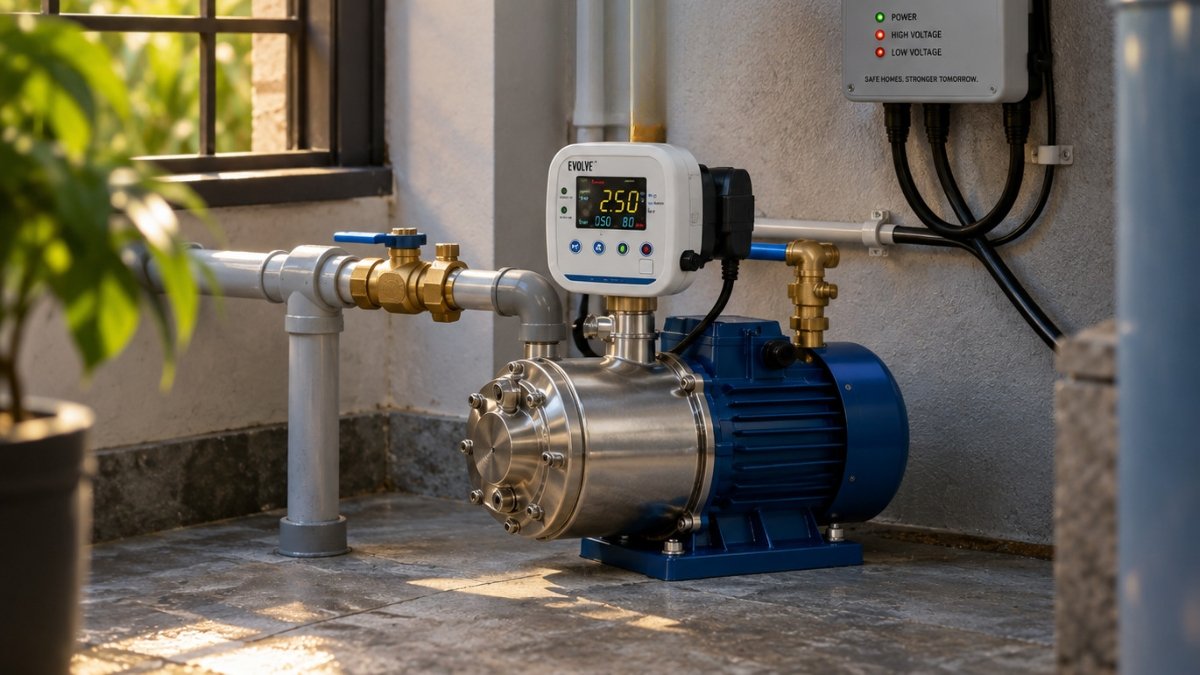
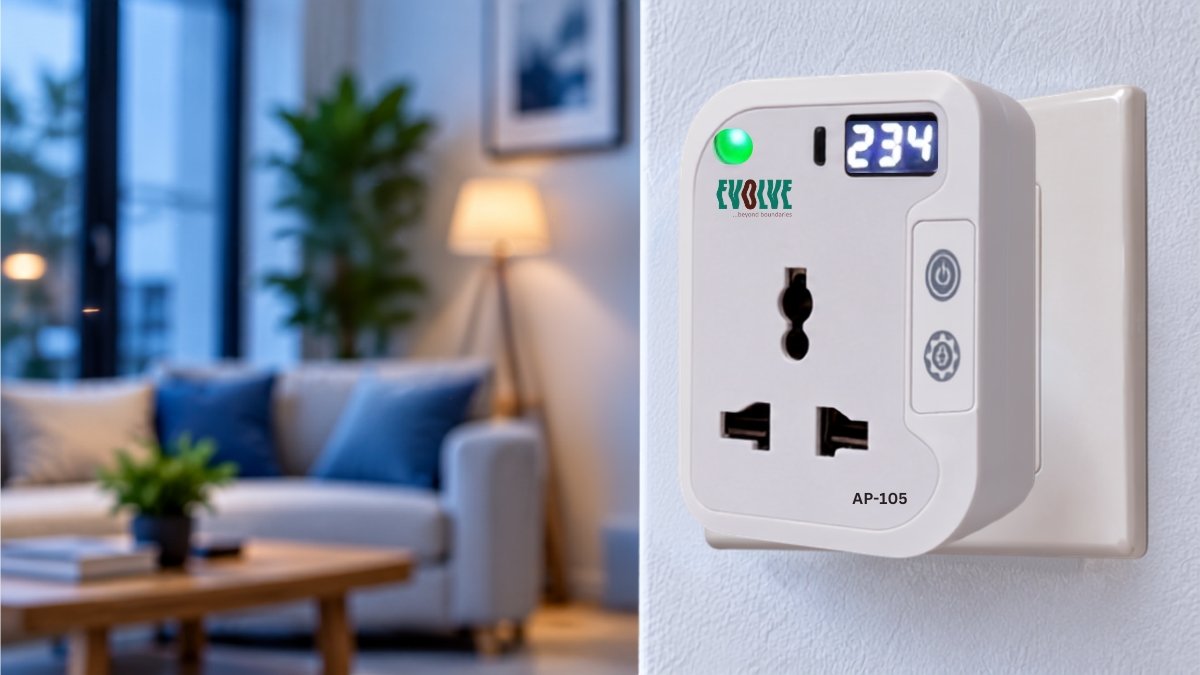
We built our range specifically because we kept hearing versions of these same stories, just with different addresses. For independent houses dealing with voltage instability, our Voltage Regulator and Auto-Phase Selector (PS 201) exist to catch exactly the kind of fluctuation that quietly kills appliances, switching power off before damage happens, not after. For water side of things, Safe Pump protects your motor from dry-runs and electrical faults, which, honestly, is the single most common repair call we hear about from borewell-dependent homes.
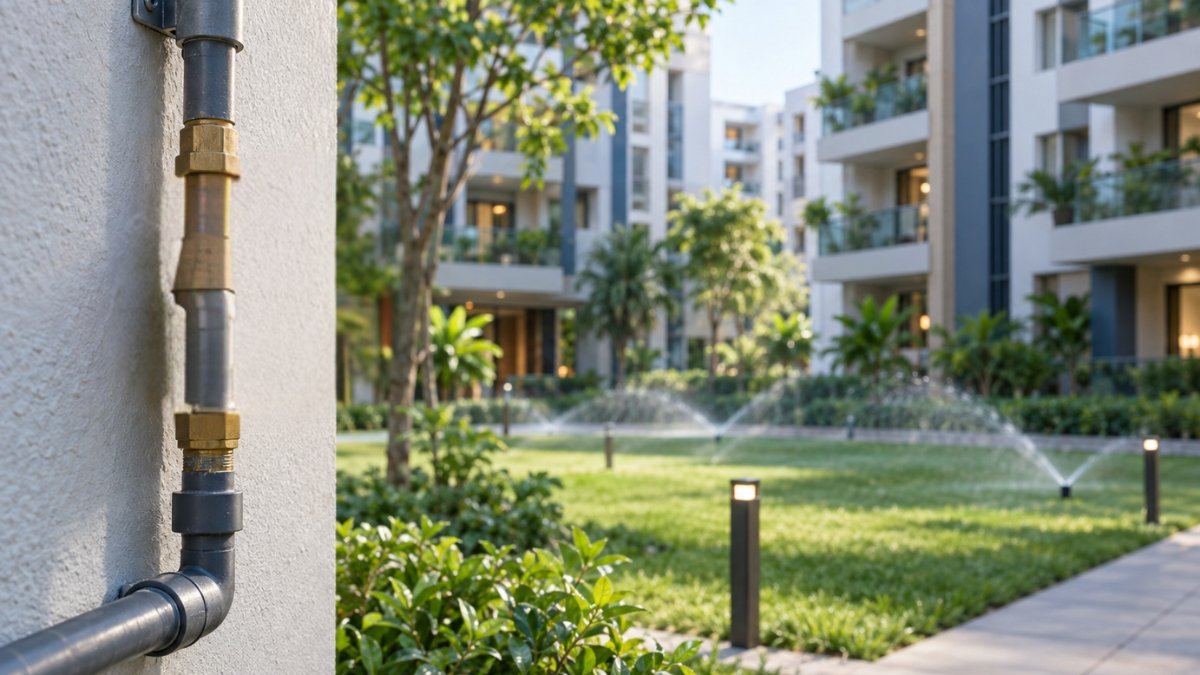
For gated communities and apartment residents, especially those managing EVs, our EV Protector (EP 101) is designed to sit quietly between your charger and the building’s power supply, absorbing the kind of instability that shared infrastructure often can’t smooth out on its own. And for uneven water pressure across floors, a Pressure Booster paired with sensible irrigation control (our Waterwise system, if you’ve got a garden or landscaped common area) tends to solve more arguments at the residents’ WhatsApp group than any committee meeting ever will.
One Thing You Can Do Today
Whether you’re in an independent house or an apartment, walk up to your main distribution board this week and just check: is there any visible protection device between the incoming supply and your major appliances or pump? If the answer is no, that’s worth fixing before the next power cut or the next unannounced voltage spike, not after.
A Small Nudge Toward Peace of Mind
Water and power problems rarely announce themselves in advance; they just show up as a dead motor or a fried appliance on an otherwise ordinary day. Whether you’re managing a home on your own or navigating decisions as part of a larger community, having the right protection in place means one less thing to lose sleep over. If you’re not sure what setup makes sense for your house or your building, drop us a message on WhatsApp; our team’s happy to walk you through it.