If you’ve spent even a single season managing a farm, you already know one thing for sure, water is everything. Too little, and your crops struggle. Too much, and you’re dealing with root rot, wasted resources, and rising costs. Finding that balance isn’t easy, especially with today’s unpredictable weather patterns. That’s exactly why more farmers
If you’ve spent even a single season managing a farm, you already know one thing for sure, water is everything. Too little, and your crops struggle. Too much, and you’re dealing with root rot, wasted resources, and rising costs. Finding that balance isn’t easy, especially with today’s unpredictable weather patterns.
That’s exactly why more farmers are slowly moving toward a Drip Irrigation System. It’s not just another “modern upgrade” people talk about; it’s becoming a necessity for anyone who wants better yield, lower costs, and smarter farming.
Let’s break it down in a way that actually makes sense.
What Makes a Drip Irrigation System Different?
Traditional irrigation methods, like flood irrigation or sprinklers, basically water everything. The soil, the pathways, the weeds… everything gets soaked.
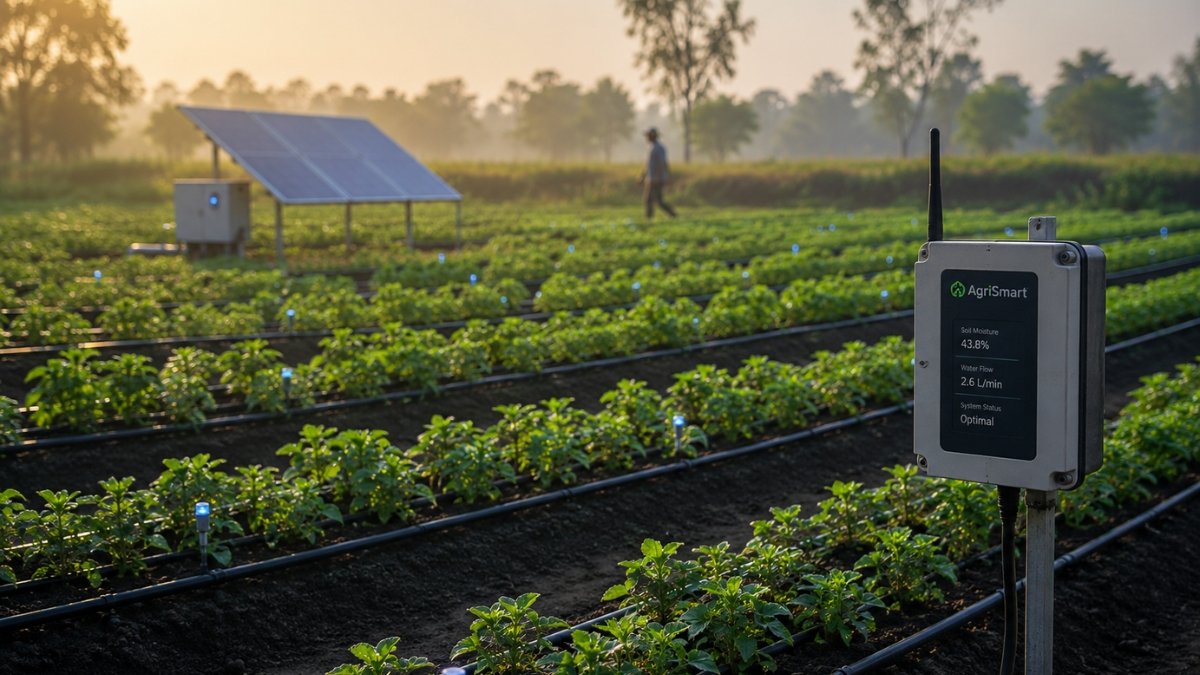
But a Drip Irrigation System works differently. It delivers water directly to the plant roots, drop by drop. No wastage, no guesswork.
It might sound simple, but this small change completely shifts how efficiently a farm operates.
Water Saving Is No Longer Optional
Water scarcity is becoming a real issue, especially in places where farming depends heavily on seasonal rains. Using excess water today could mean not having enough tomorrow.
With a Drip Irrigation System, water usage can drop significantly, sometimes by up to 50% compared to traditional methods.
Think about it: instead of flooding an entire field, you’re giving each plant exactly what it needs. Nothing more, nothing less.
This isn’t just good for the environment; it directly cuts down your water bills and pumping costs.
Better Crop Yield Without Extra Effort
Every farmer wants a higher yield. But increasing production usually means more fertiliser, more labour, and more time.
Here’s where a Drip Irrigation System quietly does the heavy lifting.
Since water is delivered consistently and directly to the roots:
- Plants grow healthier
- Nutrient absorption improves
- Stress on crops reduces
The result? Stronger plants and better output, without doubling your effort.
Many farmers notice that their crops not only grow faster but also look more uniform in size and quality.
Saves Time (And Energy You Didn’t Know You Were Losing)
Let’s be honest, manual irrigation is exhausting.
Opening channels, monitoring water flow, adjusting direction… it takes hours. And even after all that, you’re still not sure if every part of the field got enough water.
With a Drip Irrigation System, most of this work disappears.
Once installed, it can be automated. You can schedule watering times, control flow, and manage everything with minimal supervision.
That means:
- Less physical labour
- Less time in the field for watering
- More time to focus on crop health, planning, or even expanding your farm
Fertiliser Efficiency Improves (Less Waste, More Results)
Another underrated benefit of a Drip Irrigation System is how well it works with fertilisers.
Instead of spreading fertilisers across the entire field, you can use fertigation, mixing fertilisers directly with the irrigation water.
This ensures nutrients reach exactly where they’re needed: the roots.
Benefits include:
- Reduced fertilizer usage
- Better nutrient absorption
- Lower overall cost
It’s a smarter way to feed your crops without overspending.
Weed Growth Gets Under Control
One of the hidden struggles in farming is weed management. Traditional irrigation methods unintentionally encourage weed growth because water spreads everywhere.
But with a Drip Irrigation System, only the plant root zones receive water.
Dry areas between rows make it harder for weeds to grow.
Fewer weeds means:
- Less manual removal
- Reduced herbicide use
- Healthier crop competition
It’s a small advantage that adds up over time.
Works for Almost Every Crop
Whether you’re growing vegetables, fruits, flowers, or even plantation crops, a Drip Irrigation System can adapt.
It’s commonly used for:
- Tomato, chilli, and brinjal farms
- Coconut and banana plantations
- Sugarcane fields
- Flower cultivation
The flexibility is one of the biggest reasons farmers are switching; it’s not limited to a specific type of farming.
Long-Term Investment That Pays Off
At first, installing a Drip Irrigation System might feel like a big expense. Pipes, emitters, filters, it adds up.
But if you look at the bigger picture, it pays for itself.
You save on:
- Water usage
- Electricity or fuel for pumps
- Fertilizers
- Labor costs
And at the same time, your yield improves.
Most farmers recover their investment within a few seasons.
Climate Change Is Forcing Smarter Farming
Farming today isn’t what it used to be 10 or 15 years ago. Rainfall patterns are unpredictable, summers are harsher, and water availability keeps changing.
In this situation, relying on old irrigation methods is risky.
A Drip Irrigation System gives you control. Even when conditions are uncertain, your crops get consistent care.
That stability can make a huge difference between profit and loss.
Final Thoughts
If you look at everything together, water savings, better yield, reduced labor, and long-term cost benefits, it becomes clear why a Drip Irrigation System is no longer just an option.
It’s slowly becoming the backbone of modern farming.
You don’t have to change everything overnight. Even starting with a small section of your farm can show real results.
Because at the end of the day, farming isn’t just about working harder, it’s about working smarter. And this is one upgrade that genuinely makes that possible.