Walk into any hospital at 3 a.m., and you'll notice something most patients never think about: the building never really sleeps. Ventilators keep cycling. Monitors keep beeping. Refrigeration units keep vaccines and blood products at exact temperatures. None of that happens by accident; it happens because the electrical system behind the walls is doing its
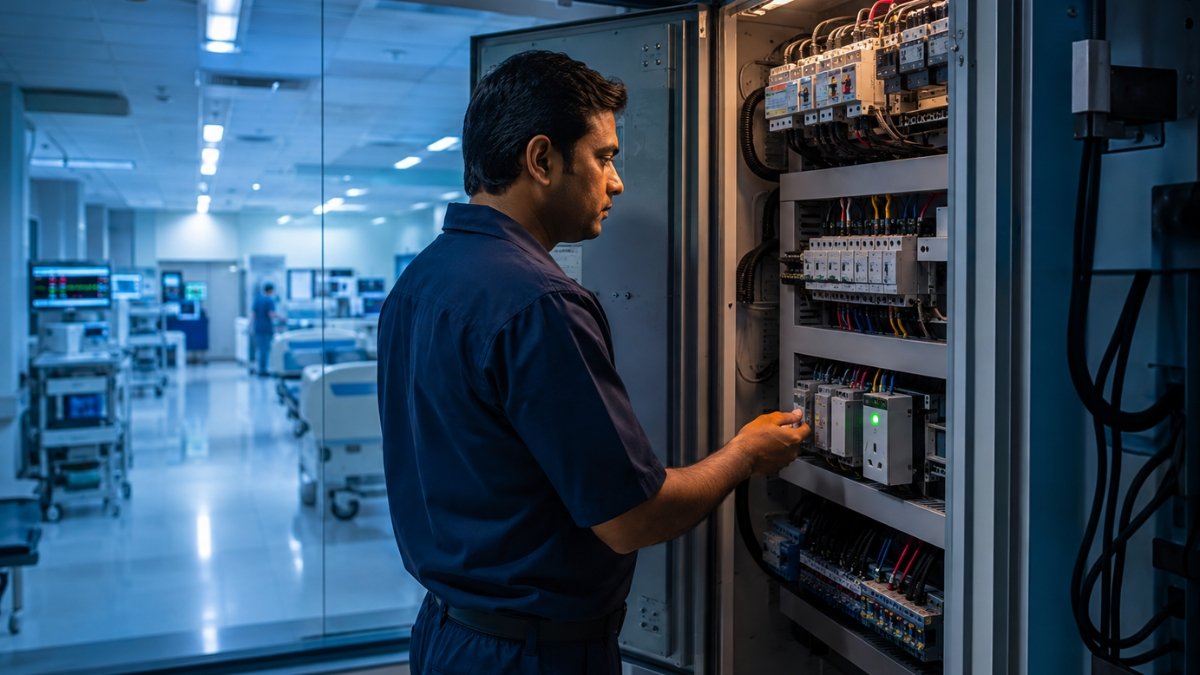
Walk into any hospital at 3 a.m., and you’ll notice something most patients never think about: the building never really sleeps. Ventilators keep cycling. Monitors keep beeping. Refrigeration units keep vaccines and blood products at exact temperatures. None of that happens by accident; it happens because the electrical system behind the walls is doing its job, quietly, minute after minute.
The problem is that electrical systems don’t always cooperate. Voltage spikes, phase imbalances, and sudden surges are a normal part of running a large facility, especially one packed with heavy medical equipment, HVAC systems, imaging machines, and server rooms. In most buildings, a power blip is an inconvenience. In a hospital, it can be the difference between a stable patient and an emergency.
That’s why high-capacity phase protection isn’t a “nice to have” for hospitals and other critical-load facilities. It’s foundational infrastructure, on the same level as backup generators or fire suppression systems.
What Actually Goes Wrong Without It
Most people picture power problems as total blackouts, but the more common and more damaging issues are quieter than that. Voltage sags, phase loss, and surges caused by lightning strikes, grid switching, or even large equipment cycling on and off within the building itself can degrade or destroy sensitive electronics over time.
Hospitals run three-phase power systems to handle heavy loads efficiently. When one phase drops out or becomes unbalanced, motors overheat, compressors fail, and diagnostic equipment can throw errors or shut down mid-procedure. Multiply that risk across dozens of departments- ICU, radiology, pharmacy, surgical suites, data centers- and it’s easy to see why a single unprotected panel can cascade into a facility-wide problem.
This is where proper surge protection earns its keep. A well-designed system doesn’t just react to a catastrophic event; it continuously filters out the smaller disturbances that wear down equipment long before anyone notices a visible failure.
Layered Protection, Not a Single Fix
Effective protection in a hospital setting rarely comes from one device. It’s a layered approach that typically includes:
- Facility-level surge protection installed at the main electrical panel to absorb large transient spikes before they spread through the building.
- Sub-panel and branch circuit protection for departments running especially sensitive or expensive equipment.
- Point-of-use protection at individual outlets and equipment stations, where a power protection plug or appliance protection plug adds a final layer of defense for critical machines like infusion pumps, monitors, and lab analyzers.
Think of it like a series of nets. The big net at the main panel catches the largest surges. Smaller nets closer to the equipment catch what slips through. By the time power actually reaches a ventilator or an MRI machine, it’s been filtered several times over.
Water and Power Are More Connected Than People Assume
Hospitals also depend heavily on water systems,x sterilization, cooling towers, dialysis units, and general facility operations all need a steady, well-managed water supply. What often gets overlooked is how closely water and power systems interact. Pumps, valves, and treatment equipment all run on electricity, and a power disturbance that damages a pump controller can just as easily disrupt water delivery as it can disrupt a monitor.
This is why many facilities are moving toward integrated water and power management solutions rather than treating the two as separate problems. When electrical protection and water management solutions are planned together, a facility gets a much clearer picture of where vulnerabilities actually sit. A surge that takes out a control board for a water pump is just as disruptive as one that takes out a piece of medical equipment, even if it’s less visible to staff and patients.
The Cost of Doing Nothing
It’s tempting to think of phase protection as a line item to trim during budget season. But the real cost of skipping it shows up later, in ways that are much harder to plan for:
- Replacing high-end diagnostic and imaging equipment damaged by repeated surges
- Emergency downtime while systems are repaired or replaced
- Compliance issues if backup and protective systems don’t meet regulatory standards
- The less quantifiable, but very real, risk to patient safety when equipment fails at the wrong moment
Compared to those outcomes, a properly sized protection system is a modest investment. It’s also one that tends to pay for itself simply by extending the life of equipment that would otherwise need early replacement.
What to Look for When Upgrading
Facilities managers evaluating their protection setup should be asking a few practical questions: Is the surge protection rated for the actual load of the facility, or was it sized for a much smaller building? Are individual departments protected, or does the whole system rely on one point of failure at the main panel? And are water systems included in the planning conversation, or treated as an afterthought?
A facility that can answer those questions with confidence is in a much stronger position than one that’s only thinking about power protection after something has already gone wrong.
Final Thought
Hospitals don’t get to pause operations while the power grid sorts itself out. Every disturbance that reaches sensitive equipment carries real consequences, for the budget and, more importantly, for patient care. High-capacity phase protection, paired with thoughtful water and power management solutions, isn’t about chasing every possible failure. It’s about building a facility that can absorb the everyday chaos of the electrical grid without ever letting patients feel it.