You made the switch to an electric vehicle. No fuel queues, no rising petrol prices, lower running costs, and a cleaner conscience. It made sense then, and it still makes sense now. But here's something most EV owners don't think about until it's too late: the most dangerous moment for your electric vehicle isn't on
You made the switch to an electric vehicle. No fuel queues, no rising petrol prices, lower running costs, and a cleaner conscience. It made sense then, and it still makes sense now.
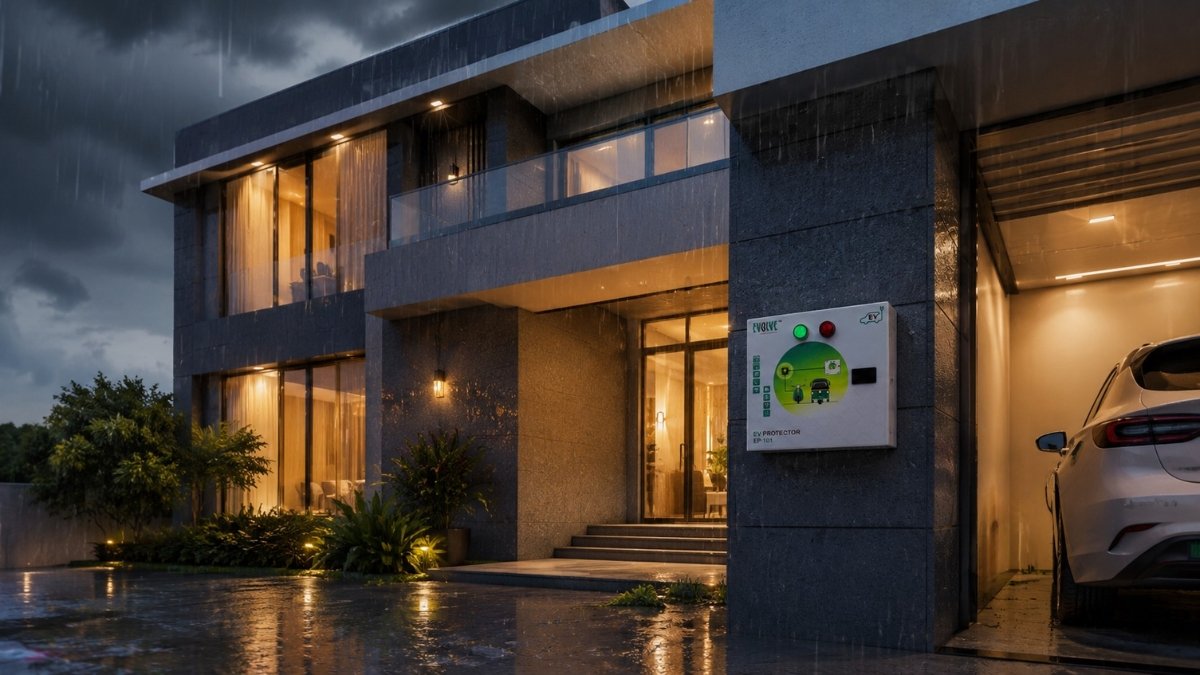
But here’s something most EV owners don’t think about until it’s too late: the most dangerous moment for your electric vehicle isn’t on the road. It’s at home, plugged into a charging socket, during a monsoon evening.
That’s when every risk in the electrical supply, voltage spikes from storm-related grid tripping, earth leakage from wet walls and flooded cable ducts, neutral failures that distort supply voltage, power surges when electricity returns after an outage, all converge on one point: the cable connected to your vehicle’s battery.
India’s monsoon season and EV charging are a combination that deserves far more attention than it typically gets. And the Evolve EP 101 EV Protector is designed specifically to address it.
The Monsoon Charging Problem Nobody Warns You About
When you charge your EV at home, you’re doing something that sounds simple: plugging a cable into a socket. But what’s actually happening is that your vehicle’s onboard charger is pulling several kilowatts of power continuously, sometimes for 4 to 8 hours overnight, while the vehicle sits stationary and unattended.
During that window, the quality of the power coming from your wall socket matters enormously. And during monsoon, that quality degrades in ways that are invisible to you but very real to your vehicle’s charging system.
Voltage surges during storm tripping: Every time lightning strikes near a transmission line or a feeder trips under storm load, the sudden restoration of power comes with a voltage spike. If your EV is connected and charging, that spike travels straight to the charger.
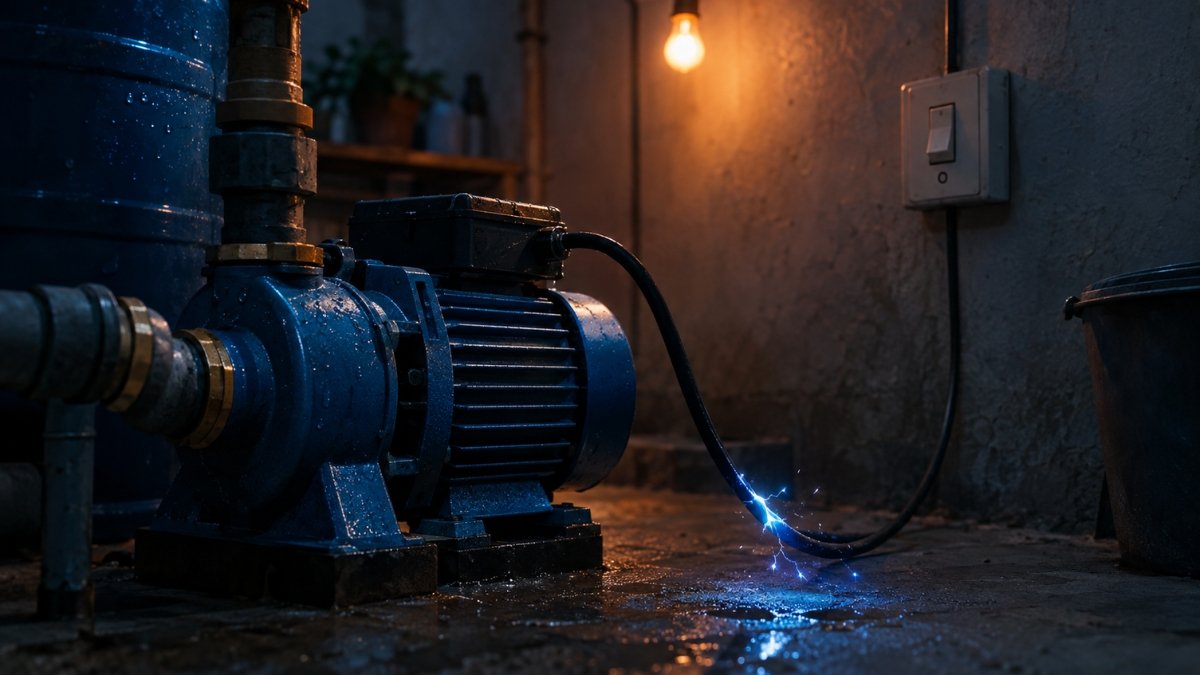
Earth leakage from wet conditions: Monsoon saturates walls, floors, and cable ducts with moisture. This creates leakage paths for current that wouldn’t exist in dry conditions. In a wet electrical environment, earth leakage becomes a genuine shock risk to the person plugging or unplugging the charger and a stress condition for the vehicle’s charging circuit.
Neutral failure: When the neutral wire in a supply circuit fails or develops high resistance, common in aging Indian residential wiring exposed to repeated moisture, the phase-to-neutral voltage can swing dangerously. Appliances and chargers connected to a failed neutral supply face severely distorted voltage conditions.
Overvoltage after power restoration: After a monsoon power cut, when electricity returns, it frequently comes back with a brief overvoltage condition before the grid stabilises. An EV charger that was left connected during the outage receives this spike directly on reconnection.
None of these events is unusual during an Indian monsoon. All of them represent real risks to an EV charging system and to the person using it.
What’s at Stake: Your Vehicle, Your Charger, and Your Safety
An electric vehicle represents a significant investment. The battery pack alone, the component most vulnerable to charging-related damage, can cost anywhere from ₹1.5 lakh to ₹5 lakh or more, depending on the vehicle, and is typically not covered under standard warranty for damage caused by external power quality issues.
The onboard charger (OBC), the unit inside the vehicle that converts the AC supply to DC to charge the battery, is equally sensitive. Sustained overvoltage or surge events can damage the OBC’s power conversion circuitry. Replacement costs are high, and lead times from service centres can run to weeks.
Beyond the vehicle and the charger, there’s personal safety. Earth leakage from a wet charging environment, combined with a live connector, is a shock hazard. It’s not theoretical; it’s the kind of risk that proper electrical protection is specifically designed to eliminate.
What the Evolve EP 101 EV Protector Does
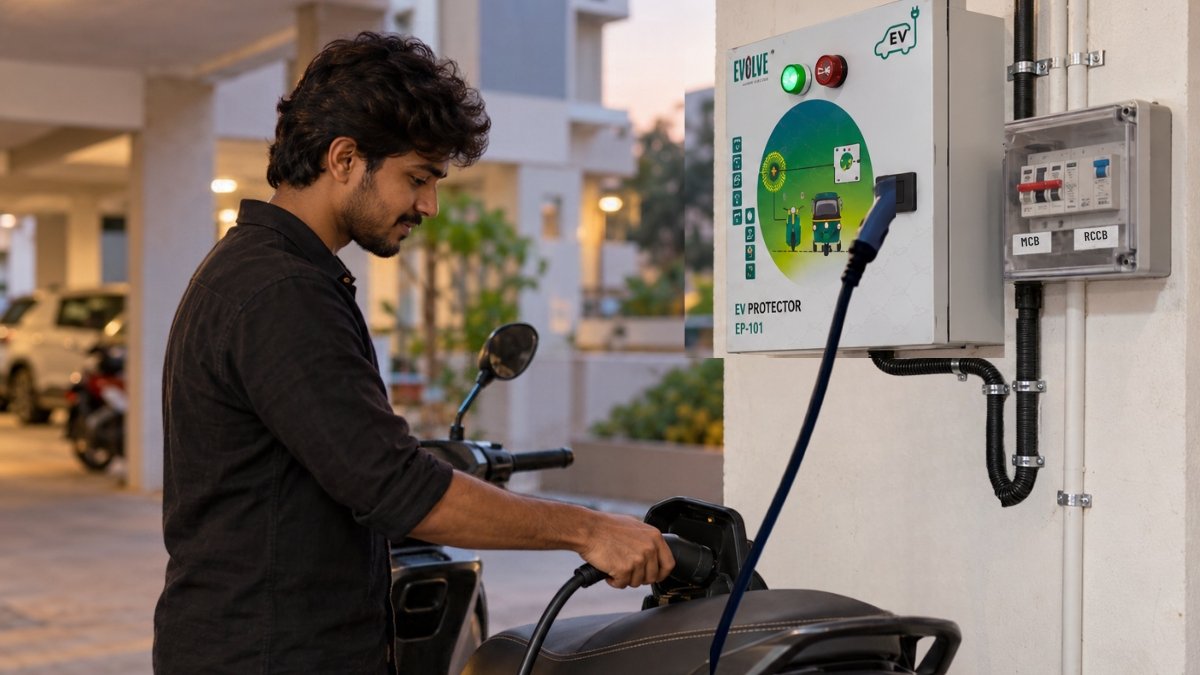
The Evolve EP 101 is a purpose-built EV Protector, not a generic surge strip or a repurposed appliance protector, but a device designed specifically for the protection requirements of EV charging environments, including commercial EV charging stations.
Here’s exactly what it protects against:
Surge Protection
Every power surge, whether from storm-related grid events, lightning-induced spikes, or equipment switching on the local feeder, is intercepted before it reaches the vehicle’s charging port. The EP 101 clamps the surge and prevents it from propagating into the OBC or battery management system.
For monsoon season specifically, this is the feature that matters every single night. Storms don’t announce themselves. A surge protector that’s inline between the wall socket and the charging cable is protection that works whether you’re awake and watching or asleep.
Overvoltage Protection
The EP 101 monitors incoming voltage continuously and disconnects the charging supply if the voltage rises above safe limits. Overvoltage during a post-outage restoration event, exactly the scenario that happens repeatedly during the monsoon, is caught and blocked before the charger sees it.
This protection also extends to gradual overvoltage conditions, when the supply in your area consistently runs high during low-load hours late at night, which is exactly when most people charge their vehicles.
Neutral Failure Protection
This is a protection feature that very few people know to ask about, and almost no generic protector provides. When neutral failure occurs, the supply to the charger becomes dangerously distorted, and single-phase voltage can effectively double in some neutral failure configurations. The EP 101 detects neutral failure and disconnects the charging supply, protecting both the vehicle and the wiring from a condition that’s particularly common in Indian residential circuits during the monsoon, when moisture accelerates corrosion in older neutral connections.
Earth Leakage Protection
Wet conditions during the monsoon create leakage paths. The EP 101’s earth leakage protection detects abnormal current flows to earth, the signature of a leakage condition, and disconnects the supply. This is direct protection against the shock hazard created by charging in environments that have been exposed to moisture, flooded cable runs, or compromised insulation.
Comprehensive Safety for Commercial EV Charging
The EP 101 is designed with commercial EV charging station reliability in mind, meaning it’s built for environments where multiple charging events happen daily, where the equipment is expected to operate unattended and without intervention, and where the consequences of a protection failure are significant. For home users, this means you’re getting commercial-grade protection rather than a consumer-grade approximation of it.
Monsoon Charging: A Scenario That Plays Out Every Season
Let’s walk through what a protected vs unprotected charging night looks like during a typical Indian monsoon evening.
8:30 PM, you plug in your EV to charge overnight. A thunderstorm is building.
10:15 PM, the storm intensifies. A nearby feeder trips under a lightning strike load. Power goes out in your area.
10:47 PM, Power is restored. The restoration comes with a brief overvoltage spike of 280V before the grid stabilises to normal.
Without the EP 101, that 280V spike hits your vehicle’s OBC directly. The OBC’s protection circuitry may or may not catch it. If it doesn’t, or if it catches it but the spike was severe enough, the OBC absorbs the damage. You wake up to a vehicle that won’t charge and a service centre visit that will take your vehicle out of commission for days.
With the EP 101, the EP 101 detects the overvoltage condition on power restoration and holds the charging circuit open until voltage stabilises within safe limits. Your vehicle sees clean, safe power when charging resumes. You wake up to a fully charged battery and nothing to report.
That’s not a hypothetical scenario. It’s what happens on hundreds of monsoon nights across India every year. The only variable is whether your charging setup has the protection to handle it.
Who Needs the Evolve EP 101?
The EP 101 is relevant for anyone charging an EV in India, but it’s particularly important for:
Home EV owners in areas with frequent monsoon power cuts, voltage fluctuations, or aging residential wiring. If your neighbourhood experiences regular outages during storms, your charging setup needs this level of protection.
EV owners in coastal areas of Tamil Nadu, Kerala, Andhra Pradesh, and Maharashtra’s coastline, where humidity is high year-round and salt air accelerates insulation degradation, creating earth leakage risk even outside the monsoon season.
Commercial EV charging station operators who need reliable, uninterrupted protection across multiple charging points with no manual intervention. The EP 101’s commercial-grade design is built for exactly this context.
Anyone who charges overnight, which is most EV owners. Overnight charging means 6–8 hours of unattended connection during the exact hours when post-storm grid conditions are most unpredictable.
The EV Investment Deserves EV-Grade Protection
India’s EV market is growing rapidly. Two-wheelers, three-wheelers, cars, commercial vehicles, and electric powertrains are becoming standard across every segment. But the infrastructure conversation has focused heavily on range, charging speeds, and battery technology, and not nearly enough on the power quality at the charging point.
Your vehicle’s onboard charger and battery management system are sophisticated electronics. They’re designed with tolerance ranges for input power quality. What they’re not designed to do is absorb unlimited abuse from a poor-quality grid supply during a monsoon storm.
Surge protection, overvoltage protection, neutral failure detection, and earth leakage protection aren’t optional extras for EV charging. They’re the baseline protection that every EV charging point should have.
The Evolve EP 101 puts all four in a single device, designed specifically for the Indian grid and the Indian monsoon.
Charge confidently. Every night. Every season.